The sculptures in the avenues

Open-air museum
Come along to the Allées de l’Empereur and the Allées de Mortarieu to discover around ten works by local artists!

Opened in December 2019 following two years of work, the Allées de l’Empereur and Mortarieu now form a wide promenade in the heart of the town, leading from the Esplanade des Fontaines to the Jardin des Plantes.

To mark the renovation of these avenues, a sculpture competition was launched in 2018 to pay tribute to Antoine Bourdelle, Montalban’s most famous sculptor. The ten sculptures by Bourdelle already on display in the town are now complemented by new contemporary works.

At the heart of the sculptures lining the avenues…

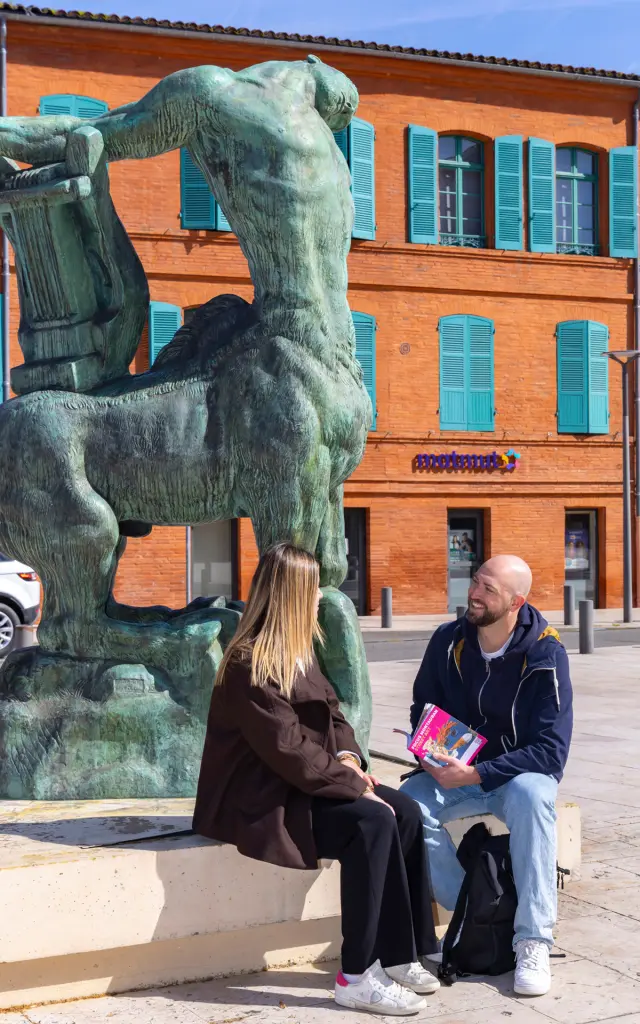
The stroll along the avenues begins at Place Prax-Paris. Visitors can admire two works by Bourdelle: ‘The Death of the Last Centaur’ (1914) and ‘Penelope’ (1906–1912).

Heading up towards the Jardin des Plantes, the tour continues with four works paying tribute to Antoine Bourdelle, created between 2019 and 2026:

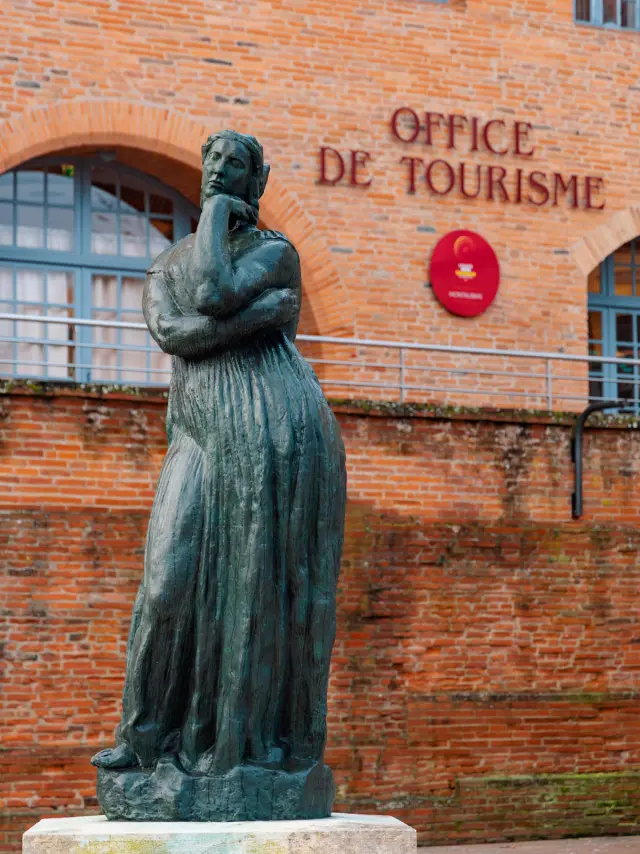
  • ‘Cleopatra’ by Flavio de Faveri (2019).
  • ‘The Wave (Camille Claudel)’ (2019) by Patrick Berthaud
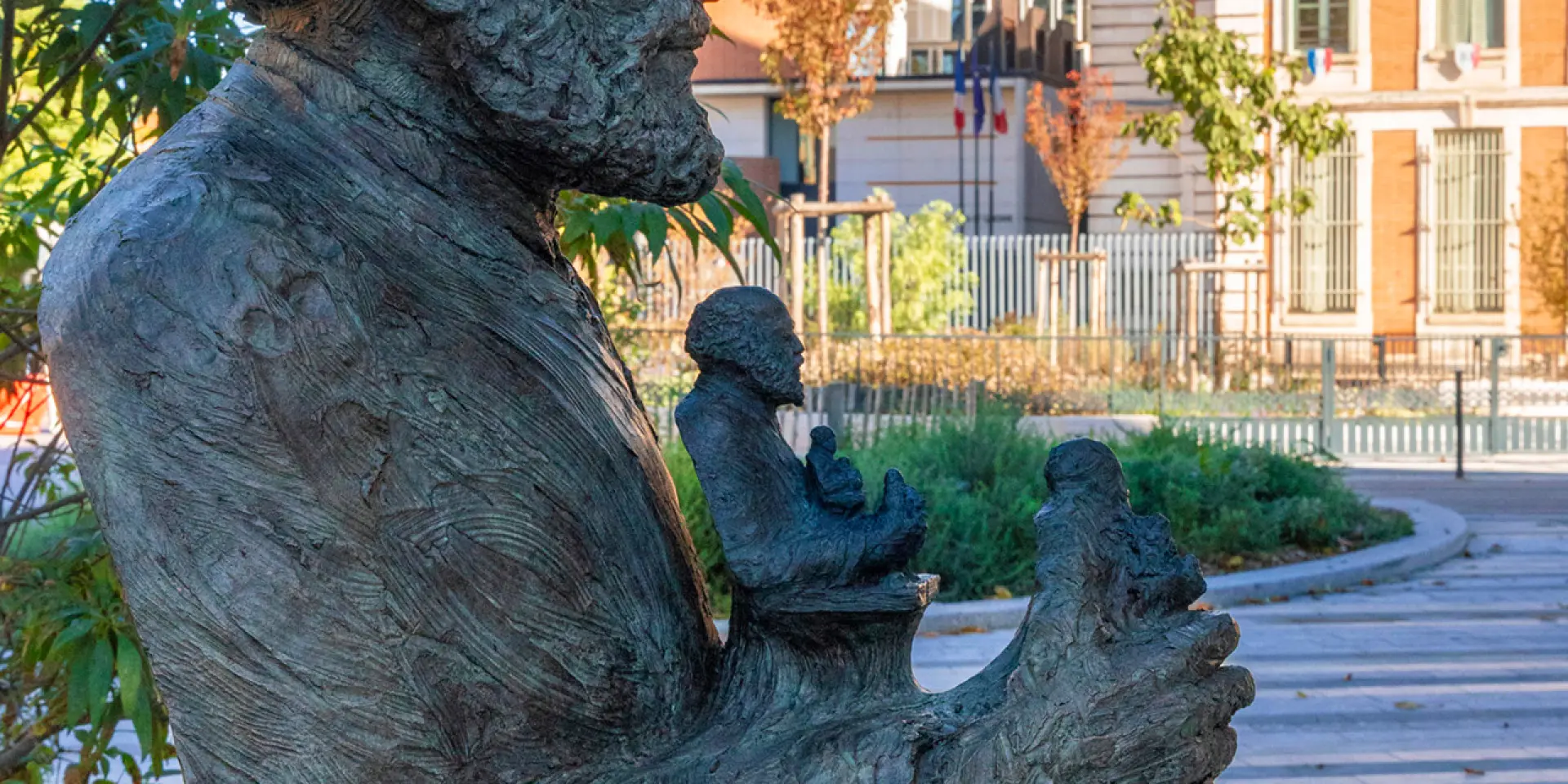
  • ‘Antoine Bourdelle (1861–1929): Self-Portrait or Mise en Abyme’ (2026) by Jean-Marc de Pas
  • ‘The Arrows of Heracles ’ (2019) by Émilie Prouchet Dalla Costa
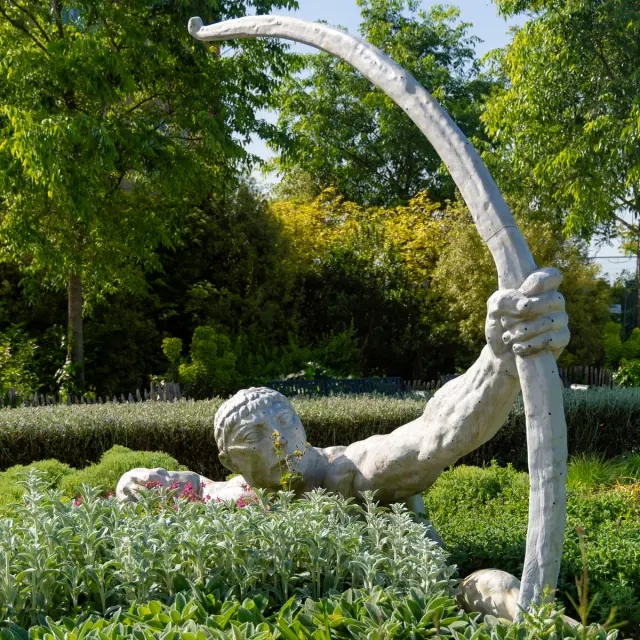
  •   ‘Heracles the Archer’ (2019) by Corinne Chauvet

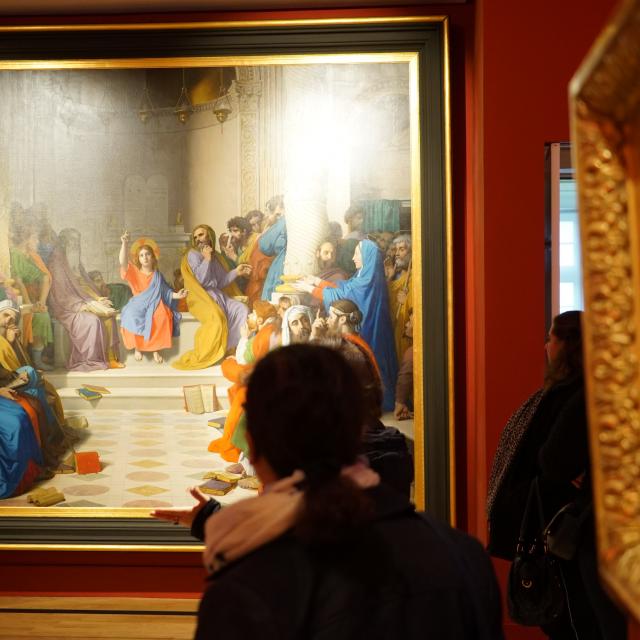
The bow in this latest work points towards the Ingres Bourdelle Museum, encouraging visitors to explore its collections, which include a significant number of works by the master.
Cleopatra

Flavio de Faveri

Bronze (2019).

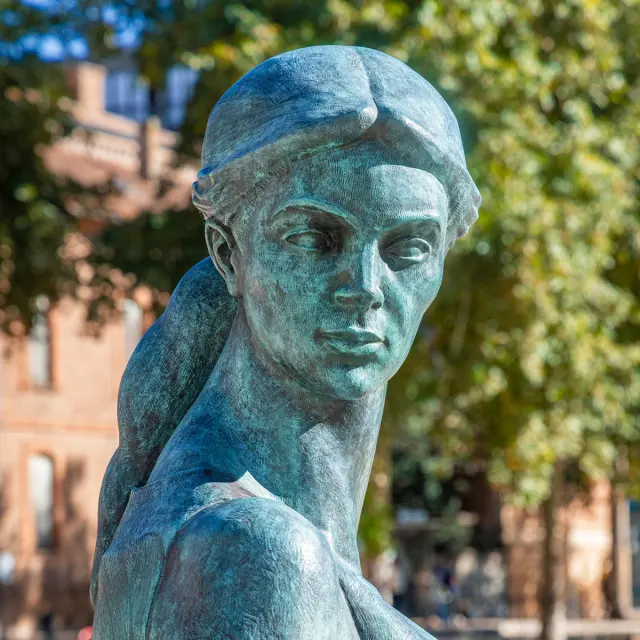
This work is a bronze cast of an earlier plaster model created in the 1990s under the title*La plaine*, originally conceived as an ‘ode to the beauty and strength of women’. By ultimately naming the bronze*Cleopatra*, Flavio de Faveri sought to pay tribute to Bourdelle’s muse and second wife, Cleopatra Sevastos.

The installation of this sculpture on the Esplanade des Fontaines serves to honour an artist who lived and worked as a sculptor in Montauban for over 50 years and whose numerous works can be seen in public spaces. ‘Cleopatra’ sharesaesthetic and structural similarities with the figure fromthe Algerian War Memorial onthe Cours Foucault: the hairstyle, the light, draped garment that reveals the chest through sheer fabric, the bare arms, and the strongly defined torso.

Bourdelle’s influence is evident in the rendering of the face and the muscles. Like Bourdelle, de Faveri had first learnt the art of sculpture in his father’s carpentry workshop.

The Wave

Patrick Berthaud

Bronze, volcanic lava plinth (2019).

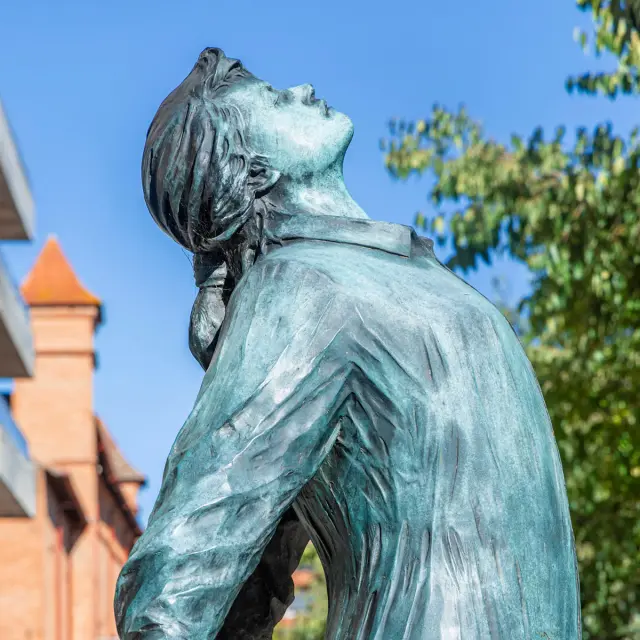
This depiction of Camille Claudel echoes Bourdelle’s encounter with the young sculptor in Rodin’s studio in 1893. By highlighting this symbolic figure of the female artist in the 19th century, Patrick Berthaud continues the rediscovery of Camille Claudel’s work and life, which began in the 1970s.

Here she is dressed in a long sculptor’s gown and appears to be rearing up as if swept away by a wave, thus recalling one of her most famous works,*La vague* or *Les Baigneuses*, dated 1897–1903. Seemingly off-balance (is she falling or rising?), this 2.60-metre-tall figure illustrates the strength, fragility and tragic fate of this sculptor, now celebrated in the town of Olympe de Gouges.

Bourdelle had been deeply moved by his encounter with Camille Claudel, dedicating a poem to her towards the end of his life in 1926.

Antoine Bourdelle (1861–1929) Self-Portrait or Mise en Abyme

Jean-Marc de Pas

Bronze (2026).

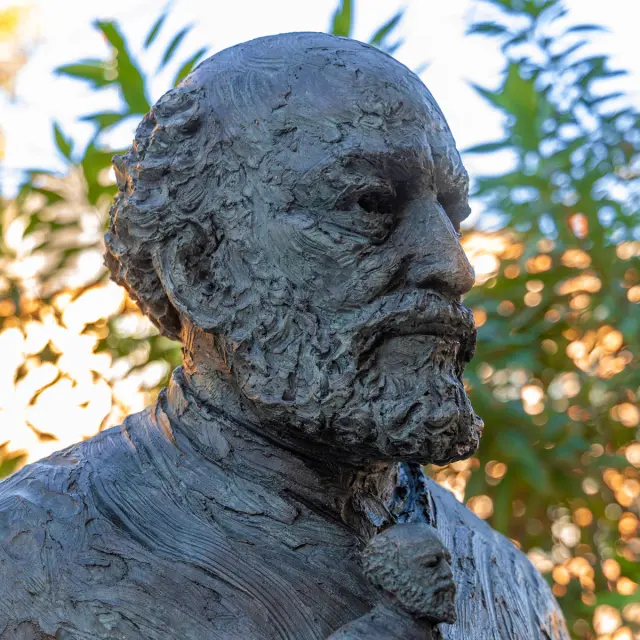
This work depicts Antoine Bourdelle at work, sculpting his self-portrait whilst leaning on a sculptor’s stool, which forms the plinth of the piece. Jean-Marc de Pas alludes to the numerous self-portraits created by Bourdelle himself, which constitute a significant part of his oeuvre.

The man’s body merges with the stool: this allows the work to remain open to interpretation and encourages the visitor’s gaze to focus on the artist’s gesture and his work. This work is subtly presented as a frame-within-a-frame, infinite.The title of the work – ‘Antoine Bourdelle (1861–1929) Self-Portrait or Mise en Abyme’ – is inspired by these two concepts.
The work measures 1.80 m and is situated as close as possible to the public. It is cast in bronze: a material frequently used by Antoine Bourdelle, which is also suitable for outdoor display. The sculpture thus takes its place in time within Montalban’s public space, on display for residents and tourists alike.
It complements the collection already on display in the town’s public spaces, comprising more than 50 sculptures, which together form a veritable open-air museum.

The arrows of Heracles

Émilie Prouchet-Dalla Costa

Corten steel (2020).

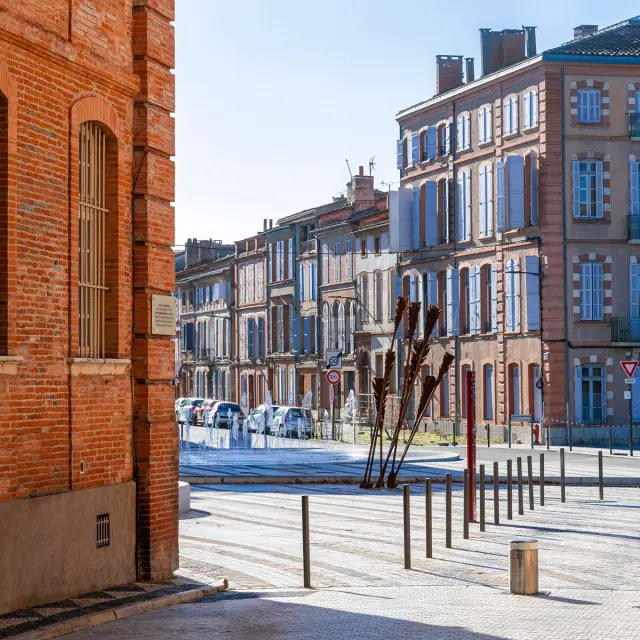
Stuck into the ground, these impressive 4.50-metre-high Corten steel arrows seem to have been plucked from the bow byBourdelle’sfamousarcher Heracles. Unlike Bourdelle, who depicts an archer without an arrow (or perhaps just after the shot), Émilie Prouchet Dalla-Costa has chosen to represent only these arrows, which were merely hinted at by the master from Montalban.

The cracks in the ground evoke the sheer force of the effort expended by the mythological hero to defeat the monstrous birds of Lake Stymphalus. The cut-outs in the steel, as well as the gold leaf dotting the fletching of the arrows, refer to the bronze feathers that made up the wings of these birds. As an epilogue to the sixth labour imposed upon Hercules, these eight monumental arrows bring a touch of antiquity into our contemporary world, serving as a new landmark within this new urban space of the redeveloped walkways.

Heracles the archer

Corinne Chauvet

Aluminium (2024).

This contemporary reinterpretation ofBourdelle’sfamous‘Hercules the Archer’, housed at the Ingres Bourdelle Museum, is much more than a simple enlargement. The artist’s intervention is evident here in her decision to retain only the upper section, thereby lending the work a modern interpretation.

Combining attention to detail with resolutely contemporary techniques, Corinne Chauvet scans and digitises the original plaster cast to recreate every minute detail, which she then covers with marble powder. Hence the work, since last summer, by the Albi-based artist to create a new statue, this time in aluminium. The artist, who had worked on the creation of the first Heracles in 2019, and then on its restoration on two occasions, set about creating a second work using the mould, which had been preserved. This work was carried out in close collaboration with the city’s cultural services.

Working alongside the Madrid-based foundry Taller de Arte José Luis Ponce – one of the few specialising in aluminium casting – Corinne Chauvet opted for the lost-wax technique in order to produce an aluminium reproduction. In addition to its white, luminous appearance, the metal lends the work a sense of fluidity, combined with a certain strength. This new statue features ‘reference points’ – markers enabling the reproduction and/or resizing of a sculpture – in homage to the sculptors’ pantograph, a technique from the 19th century, the era of Antoine Bourdelle.

Seeming to rise from the ground, Heracles and his monumental bow point us in the direction of the Ingres Bourdelle Museum, as if inviting us to rediscover the art of the famous sculptor from Montalban.

Wivisites

Audio-guided, geolocated tours

Discover Montauban with ‘Wivisites’, a range of geolocated audio-guided tours.

To explore Montauban’s heritage and key attractions, the Centre for the Interpretation of Architecture and Heritage (CIAP) offers several tours via the ‘Wivisites’ app.

Emile-Antoine Bourdelle, works and tributes:

1 hour 45 minutes

Discover this artist, a leading figure in 20th-century French sculpture, as you wander the streets of his hometown.

From the Esplanade des Fontaines to Place Bourdelle, via the Cours Foucault, admire some of his major works: *The Dying Centaur*, *The Virgin with the Offering*, and the *War Memorial to the Fallen of 1870*…

This walk will also reveal how Montauban honours its prodigal son. Indeed, as you make your way along the route, you’ll be able to see the many tributes paid to Bourdelle by contemporary artists: busts, commemorative plaques and contemporary installations.