The Villes & Pays d'Art & d'Histoire label (since 1992)
The “Ville ou Pays d’art et d’histoire” (Town or Country of Art and History) label is awarded to areas, municipalities or groups of municipalities that are aware of the challenges involved in ensuring that their residents take ownership of their architecture and heritage, and are committed to an active approach to knowledge, conservation, mediation and support for architectural quality and the quality of their living environment.
This voluntary approach is reflected in the signing of a “Ville d’art et d’histoire” or “pays d’art et d’histoire” agreement, drawn up in close consultation between the Ministry of Culture and the local authorities.The agreement is drawn up in close consultation between the Ministry of Culture and Communication (regional directorates for cultural affairs and the general directorate for heritage) and local authorities. It defines precise objectives and includes a financial component.
The Villes et Pays d’art et d’histoire national council, set up in 1995, sets the broad guidelines for this national policy, which is reflected in the following objectives within the agreements:
- Raise residents’ awareness of their surroundings and encourage quality tourism
- Introduce young people to architecture, heritage and town planning
- Present the town or country in an architecture and heritage interpretation centre.
The implementation of these actions requires the creation of an architecture and heritage promotion service. It is headed by an architecture and heritage coordinator, recruited through a competitive examination, who works in conjunction with guide-lecturers.
The Grand Site Occitanie Sud de France label
The LTRC helps to implement the communication aspect of the Grands Sites Occitanie Sud de France policy, which is part of the regional tourism and leisure development plan. The aim of this label is to enhance the economic, tourist and cultural appeal of the region. It also guarantees international promotion for the destination and enables it to obtain subsidies from the Region.
 Town sign
The FFVE’s “Villes et Villages d’Accueil des Véhicules d’Époque” (Vintage Vehicle Towns and Villages) programme aims to promote local authorities involved in the promotion of motoring heritage and to make it easier for vintage vehicle enthusiasts to get involved. The aim is to bring together, in each town or village, all the elements that make up a rich heritage: museums, expertise, events and historic vehicles.
In 2025, Greater Montauban joined the network of towns and villages.
The aim of this programme is to
Support local appeal by boosting town and village centres through tourism linked to historic vehicles.
Promote local automotive heritage.
Provide a welcoming environment for historic vehicle enthusiasts.
The towns and villages in bloom label
The “Villes et Villages Fleuris” label has been in existence for over 60 years.
It rewards the commitment of local authorities to improving their living environment. It takes into account the importance of plants in the development of public spaces, environmental protection, the preservation of natural resources and biodiversityIt takes into account the importance of plants in the development of public spaces, environmental protection, the preservation of natural resources and biodiversity, the promotion of France’s botanical heritage, the regeneration of city centres, tourist appeal and the involvement of citizens at the heart of projects.
The label is a day-to-day tool for local authorities wishing to improve the well-being of their residents and preserve the identity of their areas, while developing their living environment.
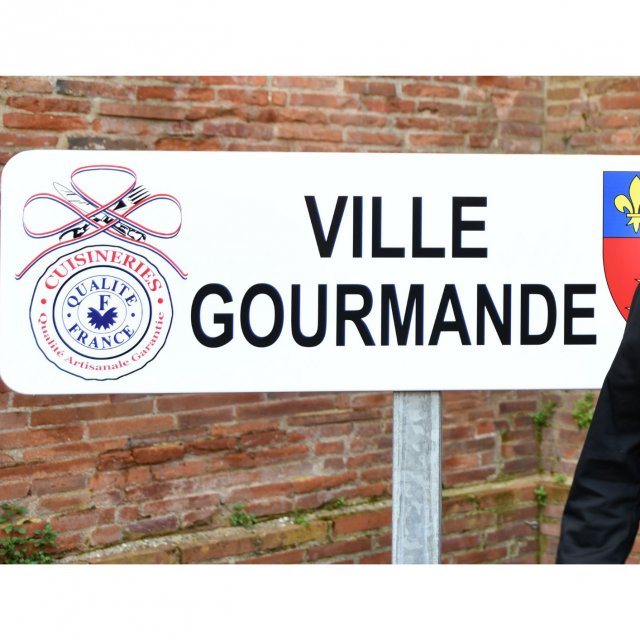
Montauban, a gourmet town
This promotion of the “gourmet town” shows a town’s desire to develop around gastronomy, the wealth of local products and local specialities.These “gourmet towns” help to unite producers, food artisans and shopkeepers around their local products, and tend to raise the quality of service throughout the town.